The project aims to improve and develop the status of women and girls in the occupied Palestinian territories (oPt), by eliminating all forms of violence and discrimination against women, protecting women from violence, and reducing the gap between men and women. The project also aims to integrate women and girls in the decision-making process, empower them, protect their right to access decision-making places, through fair representation in local elections, include women’s issues, rights, and raising their voices in peace and security decisions. In addition, contributing to strengthening accountability for the rights of women and girls at the local and international levels.
Out of an urgent need for monitoring and documenting the violations and the practices committed against women by the occupation, Women Media and Development (TAM) formed a team consisting of young men and women activists and defenders of human rights in 2022. Their capacities were built through conducting training on documentation of human rights violations based on the provisions of international law and international humanitarian law. The team become able to monitor, document, and collect evidence-based data and live testimonies of women who have been directly or indirectly subjected to violations by the Israeli occupation.
On this website, we will share with you stories of Palestinian women under Israeli occupation, which were written based on the testimonies of TAM’s documentation team, through which we review some of the daily suffering of women in this area, especially after the Israeli aggression on the Gaza Strip on October 7th 2023, and the escalating violence in the West Bank, which the occupation and its settlers exploited in the worst way to increase the cracking down on the people of the area, and increase the suffering of women there.
Human Rights Activist
Palestinians in general, and women in particular, suffer humiliation, dehumanization, discrimination, domination and violence as part of daily life under Israeli occupation in the Occupied Palestinian Territories. Palestinian women are directly targeted, used lethal force by the Israeli army, and settlers either in their homes or at checkpoints as they move between cities and villages. They are also detained in the worst conditions without regard to their gender and needs, in addition to a policy of house demolitions, forced separation of families, night raids and violations of privacy, and obstruction of access to healthcare, education and infrastructure.
The suffering of women in the West Bank has intensified after the Israeli aggression on Gaza on October 7th, 2023 as Israel unleashed an unprecedented brutal wave of violence against Palestinians, consolidated its domination over their lives, committed collective punishment measures and practices against them, and imposed physical barriers at the entrances to villages and cities by increasing the number of military checkpoints, placing concrete blocks, iron gates, and barbed wire which restricted freedom of movement, separated cities and villages from each other, and isolated the Palestinian population in their homes.
In addition to checkpoints and closures, women are subjected to many other types of violations by the occupation soldiers and settlers such as: denial of access to workplaces and agricultural land, daily night raids and invasions of privacy, destruction of infrastructure, intentional killing, beatings, vandalism of property, confiscation of land, forced displacement, denial of access to natural resources, and denial of access to basic services. Women are also subjected to arbitrary arrests, severe torture, strip searches, sexual violence, denial of sanitary pads, food and medicine, and denial of visits by lawyers and family members.
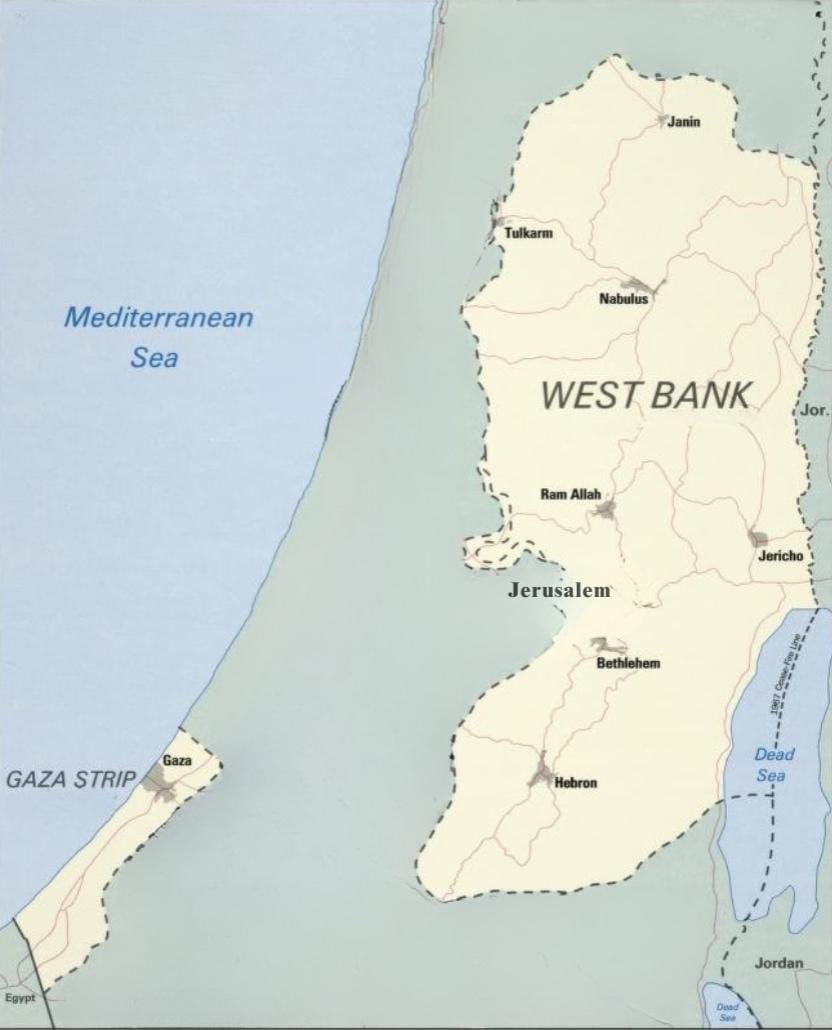
Following the Hebron Agreement, that was signed in January 1997, Hebron was divided into two areas: H1 which constitutes 80% of the total area of Hebron and is home to about 115,000 Palestinians, and is controlled by the Palestinian Authority. H2 is home to about 35,000 Palestinians and 700 Israeli settlers, remained under Israeli military control while civilian control was transferred to the Palestinian Authority.
The H2 Area is one of the most restricted areas in the West Bank, it contains more than 100 physical barriers that limit the freedom of movement, including the apartheid wall, the settlements, and checkpoints.
Israel’s control over the H2 Area has been translated into discriminatory policies that violate the Hebron Protocol, especially Article 8, which obliges the two parties to maintain “normal life throughout the city of Hebron.” The Palestinian Authority’s limited sovereignty over the West Bank under the 1995 Oslo Accords, particularly in the H2 area, has contributed to women’s vulnerability to occupation-related violence.
Since the Israeli aggression on Gaza on October 7, Palestinian residents of the Old City have been subjected to one of the harshest closures imposed on the H2 area in two decades, and are allowed to leave their homes only at a specific hour in the morning and an hour in the evening on Sundays, Tuesdays and Thursdays. While settlers are allowed to move freely.
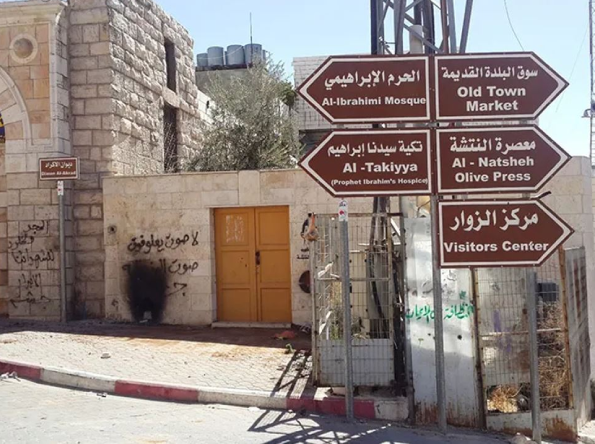
Women in the H2 area of Hebron face great challenges due to the Israeli occupation and its practices that create difficult political, economic and social conditions, affecting their lives directly or indirectly. The most important of these are: restricted freedom of movement, denial of women’s access to health services and education, insecurity due to attacks, constant threats by settlers and the Israeli soldiers, unemployment and poor economic opportunities, repression and arrests.
Since the Israeli aggression on Gaza on October 7th, women and girls in the H2 area have suffered various forms of systematic violence on a large scale with a lack of a sense of security, as they live amid a spiral of growing fears related to their safety, fear of being humiliated, fears for the safety of their families, daughters and sons, and those related to the concerns of settlers attacking their homes at night accompanied by soldiers, and the harm this attack may result in to all family members, with complete impunity.
Based on the live testimonies collected by our youth group in the H2 area, Palestinian women are humiliated and their dignity is degraded at checkpoints, many women have had to walk despite their health suffering, and the occupation soldiers have also bargained with them on many occasions to allow them to cross after taking off their Hijab or undergoing a humiliating and embarrassing search. Women often refrain from reporting sexual assaults by Israeli soldiers because they fear for their reputation. This leaves very severe psychological effects, especially on girls who live in a sensitive age in adolescence.
The occupying power have a set of duties and obligations toward the occupied territory under international humanitarian law, and these duties are spelled out primarily in the Hague Regulations of 1907 and the Fourth Geneva Convention. The obligations include:
In addition to the provisions of international humanitarian law, the occupation authorities are committed to international human rights law, which is a set of human rights conventions ratified by the occupying power within the United Nations system, which it is committed to towards its citizens, it must abide by it towards the citizens of the occupied territories as well, and the following are the most important of these conventions:
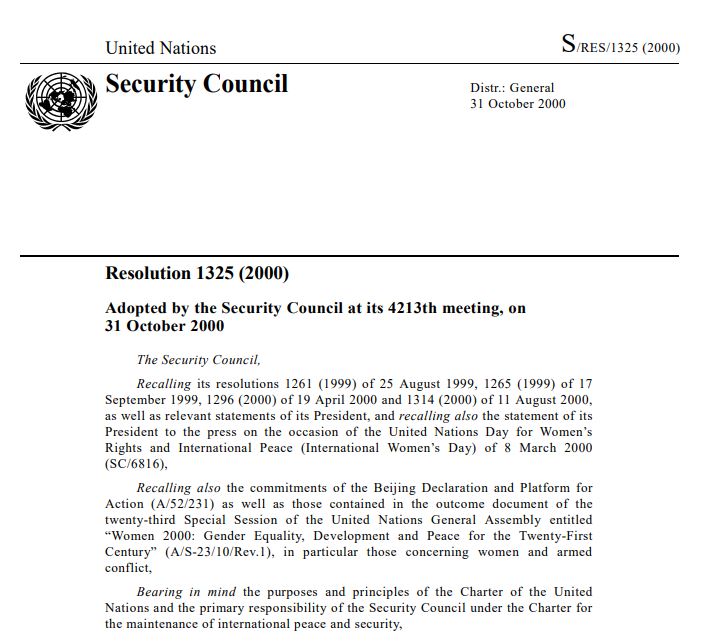
Resolution adopted unanimously by the Security Council at its 4213th meeting on 31/10/2000, with the aim of providing protection for women in conflicts, enhancing the role of women in the maintenance of peace and security, and decision-making related to the prevention and resolution of conflicts.
This Security Council resolution emphasizes the equal and full participation of women as actors in conflict prevention and resolution, and in peacebuilding and peacekeeping, stresses the need for the full application of international humanitarian law and international human rights law that protect the rights of women and girls before, during and after armed conflict, calls upon Member States to ensure the equal participation and full participation of women in all efforts to maintain and promote peace and security and urges all parties, including the State of Palestine, to promote the status and participation of women and the integration of a gender perspective in all areas of peacebuilding.
In order for the legal authorities and human rights institutions to stand up to their responsibilities, and in order to alleviate the suffering of women in light of the Israeli occupation, Women have shared with TAM’s documentation team a number of important recommendations on several levels:
Women Media and Development (TAM) was established in September 2003 by a group of media women and activists in community work and was registered in February 2004 in accordance to the Palestinian Charities and civil Organizations law no. (1) of 2000.
The idea behind launching TAM as it was initiated by a group of media women who felt that there was a severe shortage of programs and information materials of social and feministic issues in Palestine, and by their profound faith in the importance of media as an essential instrument in community development and empowerment of women and the use of media as a tool for developing, disseminating and publicizing of gender concepts, this group of media women sought the establishment of TAM in September 2003 and headquartered in Bethlehem while its work scope covered Palestine.
TAM tasks are derived from the principles of human rights, gender, democracy and justice, non-violence, dialogue, combating all forms of discrimination and the protection of the bodily, spiritual and moral freedoms and the effective and active participation and creativity.